HyperI

HyperI

Data Fusion Engine

Real-time data pipelines at scale — without the complexity.

DATA FUSION ENGINE DFE SECURE RECEIPT DATA QUALITY PARSING DATA QUALITY ENRICHMENT / TRANSFORM BIG DATA (DEFAULT) OPTIMISED STORE XDE / DFE OUTPUT RECEIVER INGESTION ANALYSIS AUTO-SCALE by default
Opinionated by design

Works out of the box. Configured for your reality.

Most data platforms give you a blank canvas and call it flexibility. HyperI takes a different approach — the DFE is opinionated by design, delivering 80% of what enterprise security teams need without building from scratch. Pre-built schemas, pre-configured pipelines, and pre-integrated use case packs mean you’re operational in days, not quarters.

META SCHEMA INGEST PIPELINE DERIVED SCHEMA DERIVED SCHEMA DERIVED SCHEMA
Live — All systems operational
Events Processed
0
per second
Threats Detected
0
last 24 hours
System Uptime
0
% availability
0
Active Pipelines
0
Data Sources
0
Detection Rules
0
Avg MTTD (sec)
Built for scale, not scaled up to it

Designed top-down. Not the other way around.

Index based approaches such Splunk and Elastic were built for mid-scale environments and stretched upward as data volumes grew — creating performance bottlenecks, spiralling costs, and architectural compromise. The DFE starts at enterprise scale and works downward. Linear cost scaling, horizontal architecture, and no volumetric penalties mean the platform gets more efficient as you grow, not more expensive.

Accept your data as it arrives

Schema-flexible ingestion. No contracts. No blockers.

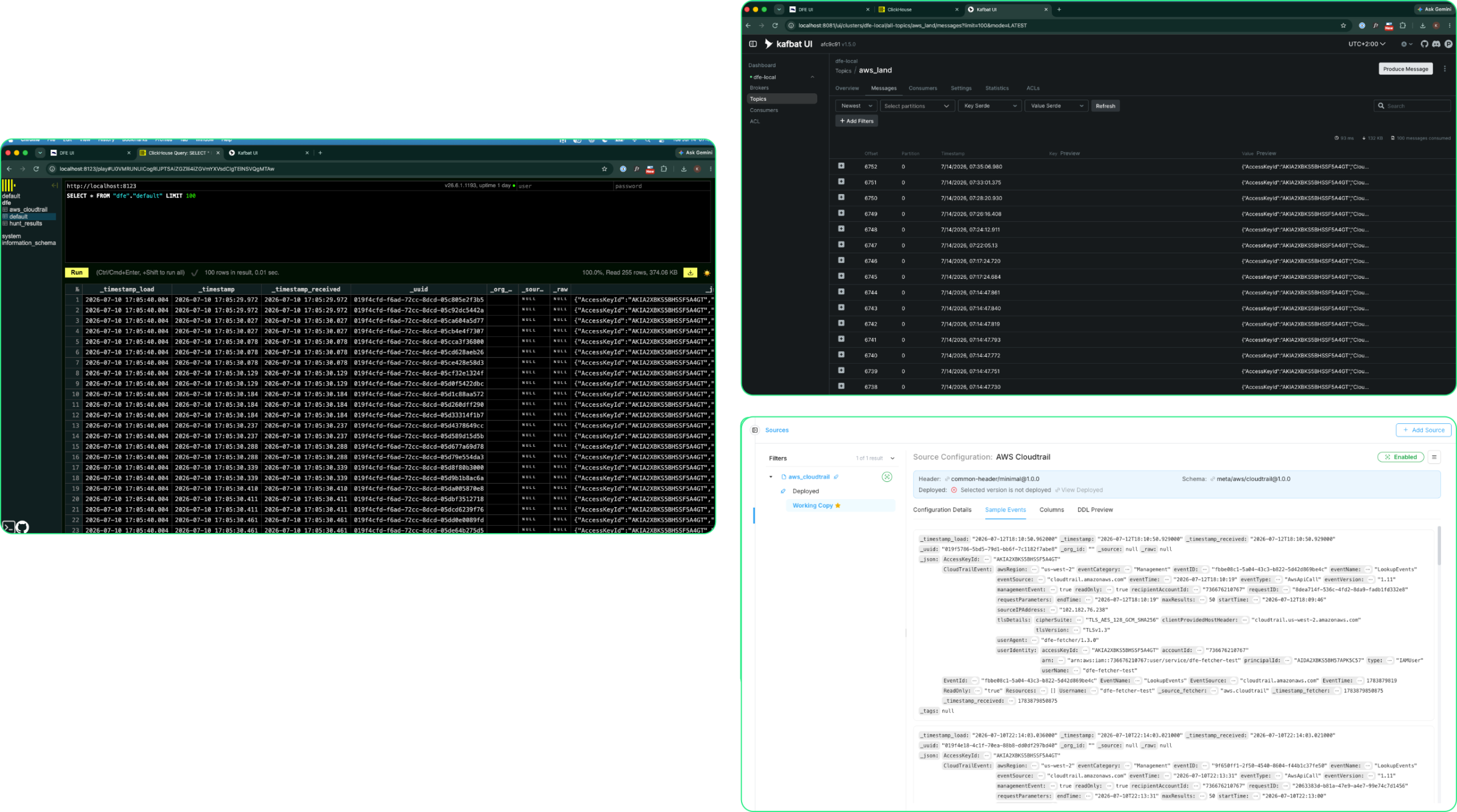
Traditional data warehouses demand perfect schemas before data can be ingested. Splunk and Elastic accept everything but give you no structure. The DFE gives you both — ingest data as you receive it, then progressively enrich and normalise it over time. Meta Schemas and Derived Schemas let you improve your data model continuously without stopping the pipeline or renegotiating contracts with every source system.

Automation
Build schemas in minutes, not months

Plan, build, and deploy data schemas across your environment with a structured, repeatable workflow.

Plan, build, and deploy in a guided three-step process
Version-controlled schemas with full audit history
Deploy across multiple organisations simultaneously
Supports Syslog, Filebeat, Windows, CEF and more
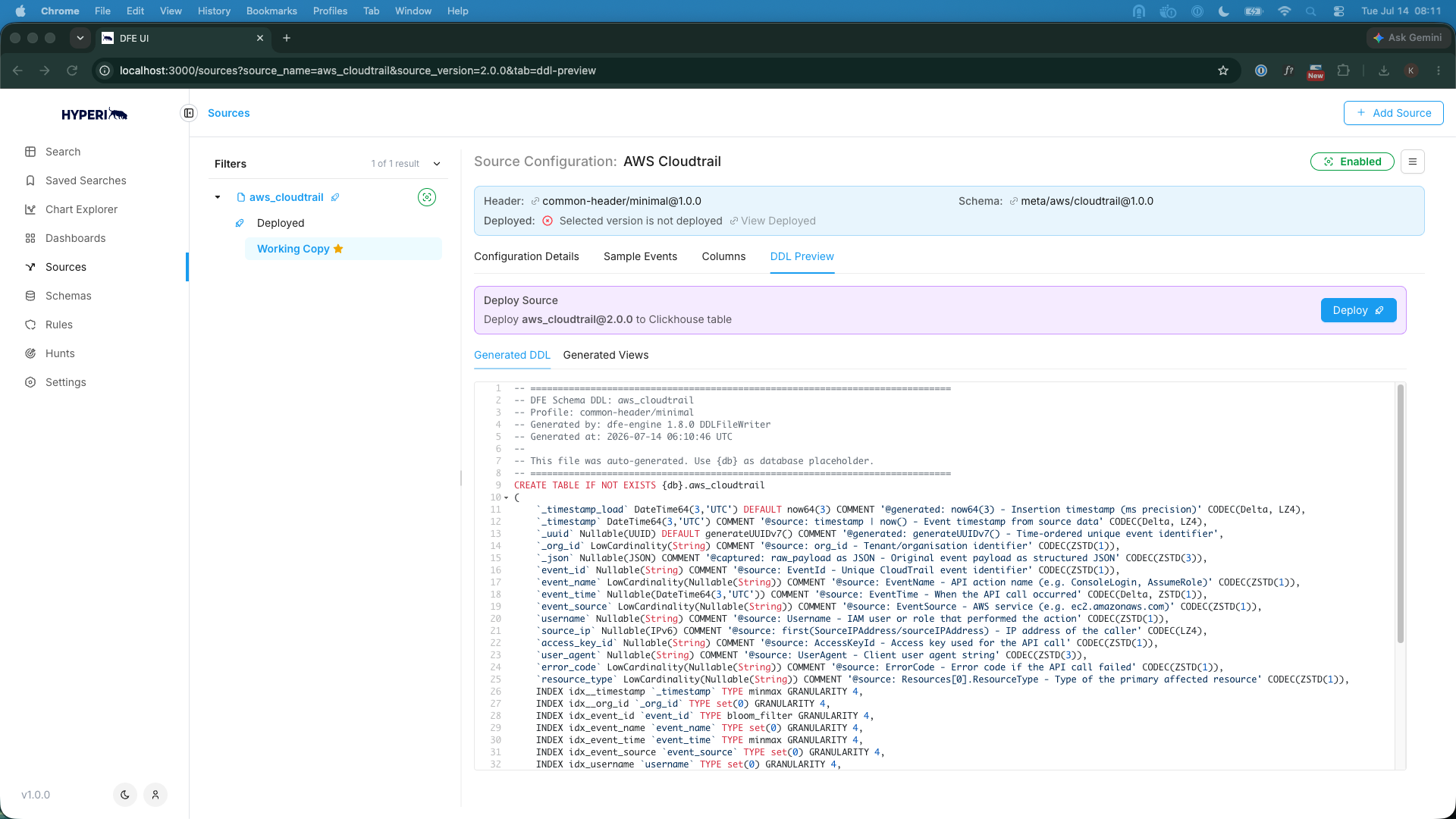
Schema Builds
Deployment
Deploy across your entire environment in one action

Apply schema changes to multiple organisations instantly — use the latest build or pin a specific release.

Apply to all organisations or target specific tenants
Deploy multiple built schemas in a single operation
Use latest build or pin to a specific version
Reduces integration time from months to days
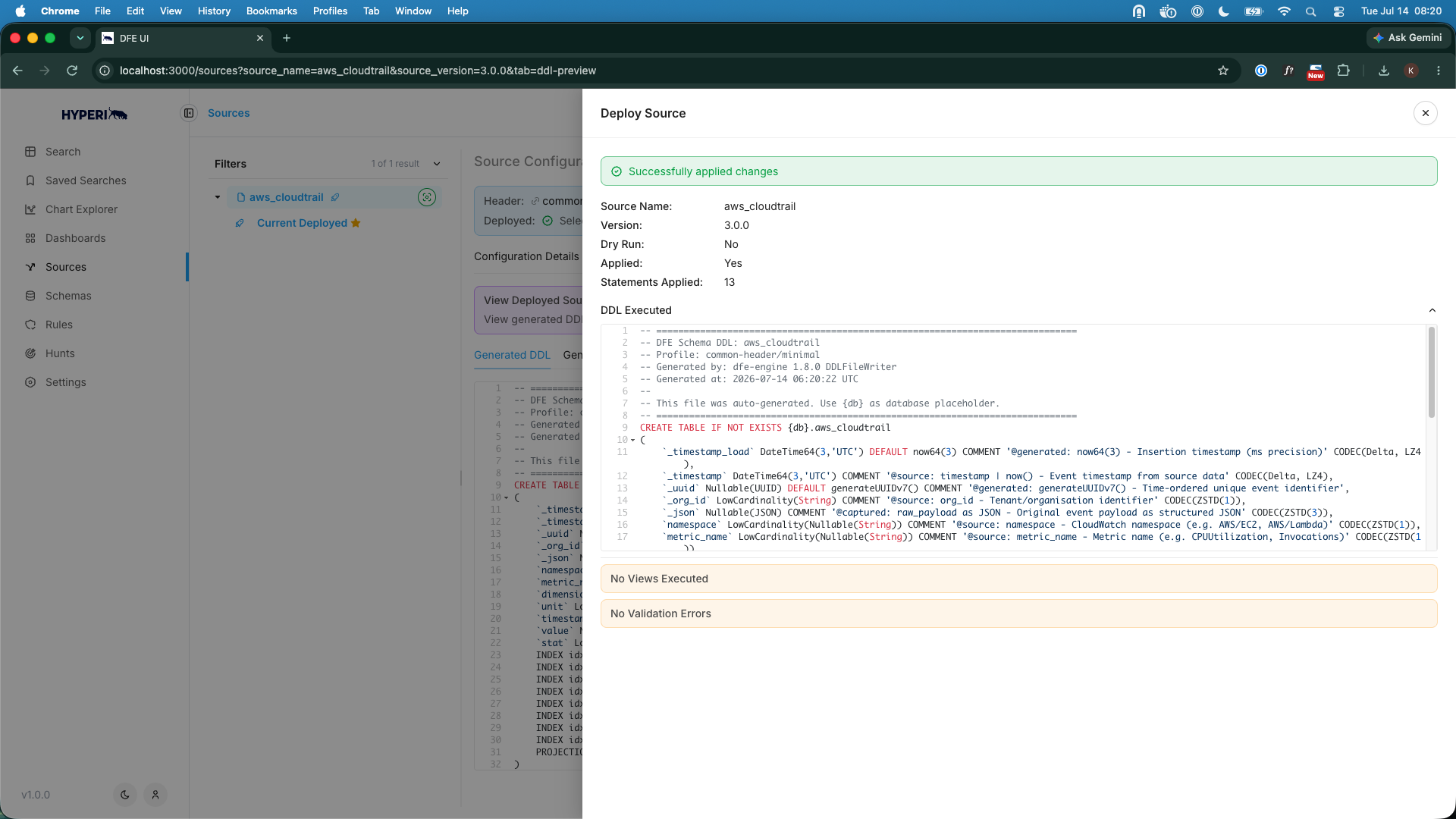
Deploy Schema
Hunting & Alerting
Real-time detection with custom SQL hunt rules

Write and deploy custom detection rules directly against your data pipelines with full SQL flexibility.

Custom SQL hunt queries against live data
Severity, schedule, and remediation steps per rule
Scoped per schema — precise, low-noise detection
Real-time visibility into threat activity
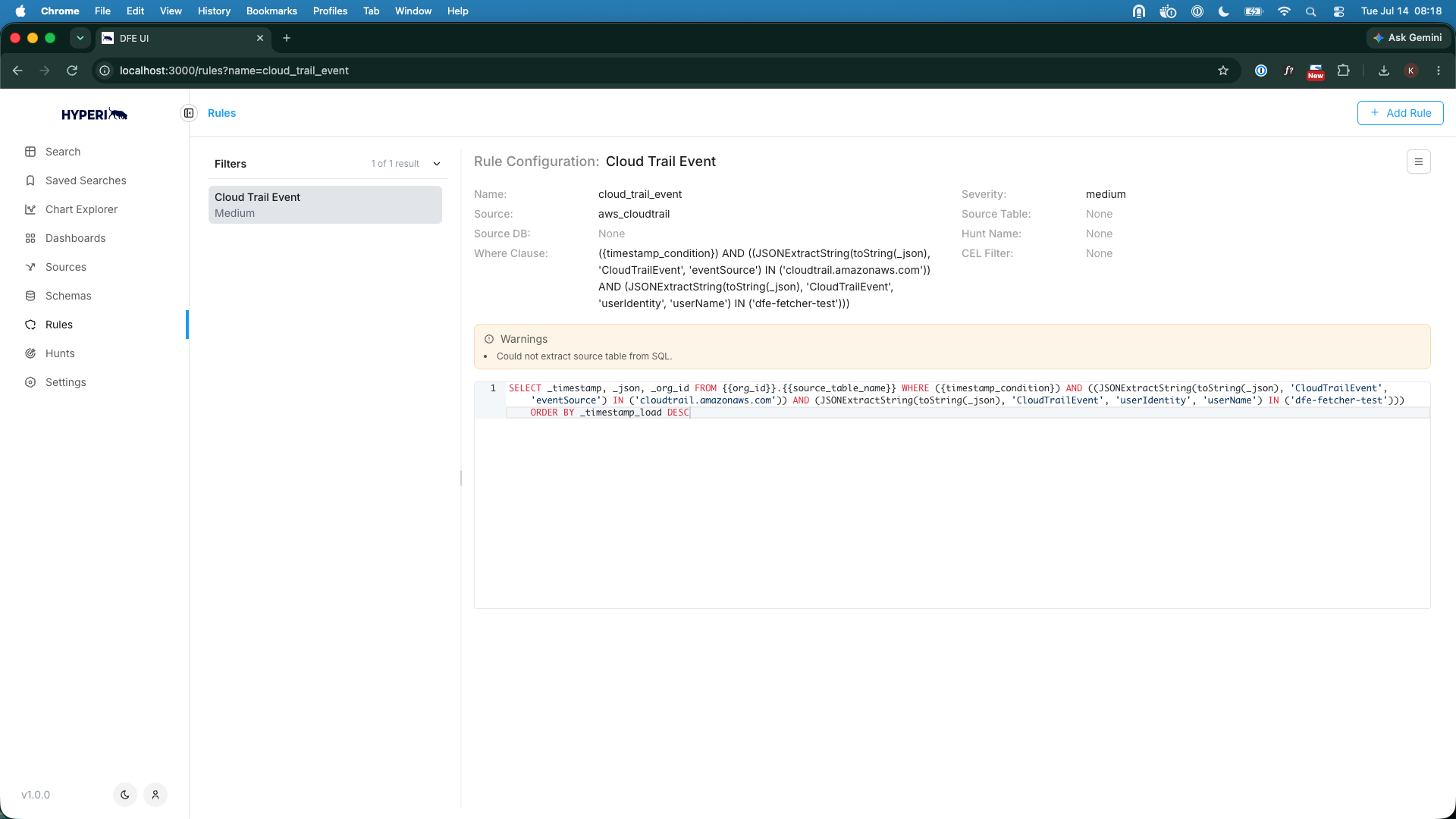
Detection Rules
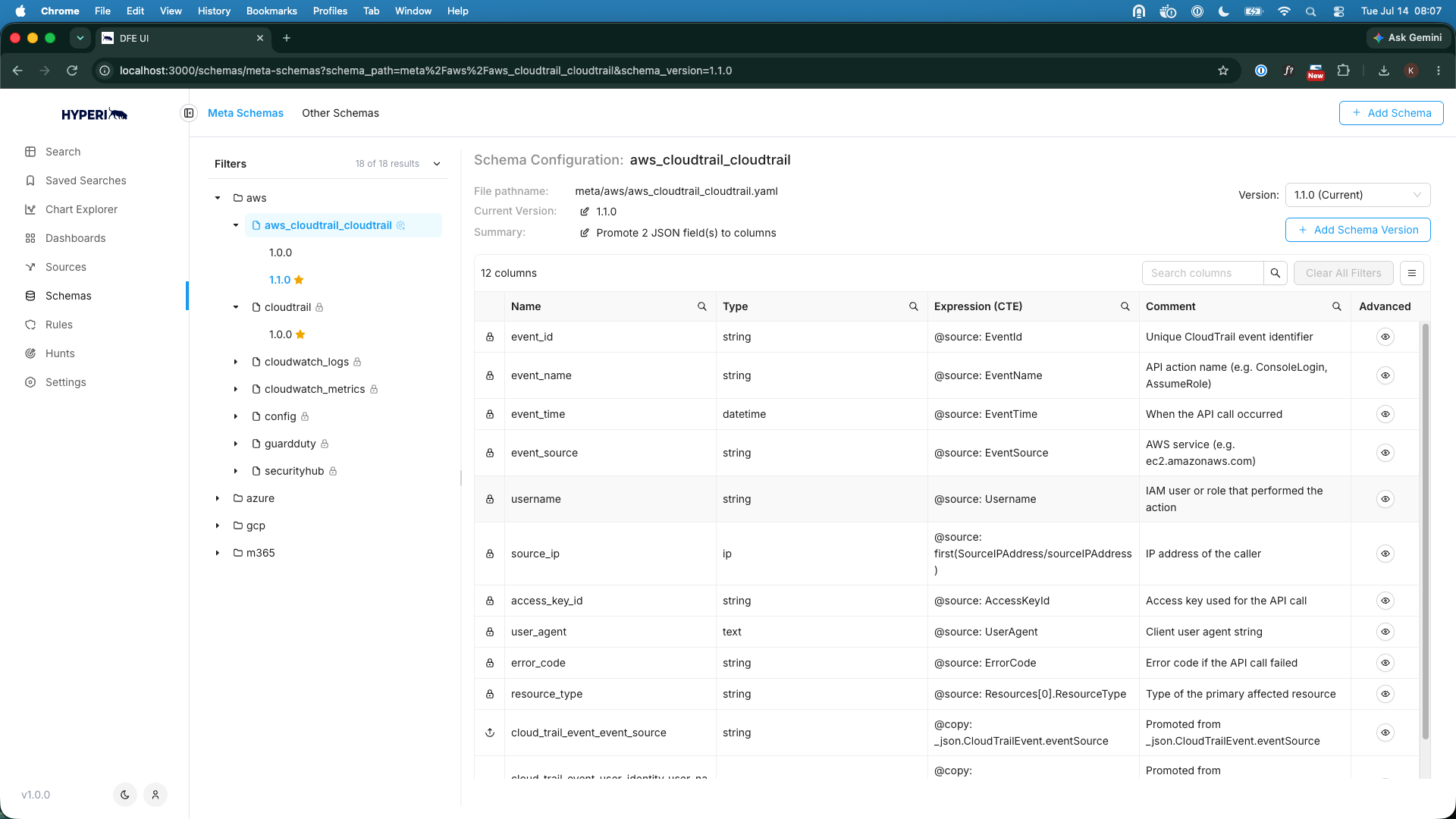
Schema Management
Manage and version your data schemas centrally

Upload, compare, and manage meta schemas and derived schemas from a single interface with full version history.

Upload Meta Schemas via CSV or Elastic Index Template
Create derived schemas from a base meta schema
Compare versions with a built-in diff view
Full audit trail on every schema change
Schema Management
XDR CYBER USE CASE SYSLOG ASA META SCHEMA DERIVED SCHEMAS INGEST SOURCE TIGHTLY COUPLED logs_syslog_cisco_asa FILEBEAT APACHE SOURCE logs_filebeat NETWORK DISCOVERY SOURCE context_network_topology context_discovered_hosts NETFLOW SOURCE logs_netflow
See it in practice

Each data source connects through a Source block containing a Meta Schema, Derived Schemas, and an Ingest pipeline. The DFE handles normalisation and enrichment automatically — your team works with clean, structured output tables, not raw log streams.

You work at the right level

The complexity is handled. You focus on outcomes.

ClickHouse, Kafka, Kubernetes, schema management, pipeline orchestration — the DFE implements all of this as code, under the hood. You operate at the level of data primitives, use cases, and scaling decisions. Not container configurations. Not cluster tuning. Not vendor-specific query languages.

BENEFITS

Improved Efficiency
Improved Efficiency

 Automate repetitive tasks and streamline workflows, allowing security teams to focus on high-priority activities.

Improved Efficiency
Seamless Integration

Leverage existing investments in SIEMs, open-source tools, and endpoint solutions without retooling.

Improved Efficiency
Enhanced Threat Detection

Uncover sophisticated, multi-stage attacks with cross-domain analysis that eliminates silos, and additionally leverages HyperSec preconfigured cyber sources including Sigma and various Threat Intelligence Products.

Improved Efficiency
Cost-Effective Scalability

Scale detection capabilities without exponential cost increases, even in large environments.

Improved Efficiency
Accelerated Response

Real-time processing enables faster detection and action, reducing dwell time for attackers.

Ready to get started?

Talk to a specialist